

Morning Cadence
What a Season of Slow Mornings Documented in a Working Notebook
Harriet Marsden
·
·
9 min read

The prevailing model of physical readiness — the one embedded in most structured fitness writing — is one of periodic overhaul. A programme is adopted, followed intensively for several weeks, and then either continued or abandoned. The evidence in these notebooks, accumulated across several years of daily observation, points toward a quieter and more durable alternative.
Periodic overhaul works for some people, in some circumstances, for limited periods. The research on exercise adherence — the maintenance of physical activity over timescales longer than twelve weeks — consistently shows that intensive intervention followed by reduced structure produces a pattern of engagement and disengagement that, on balance, does not sustain physical readiness across years. The gains of the intensive period are real, but their durability is limited by the difficulty of maintaining a sharply elevated level of structured activity indefinitely.
The alternative described here is not a programme in any conventional sense. It does not direct a weekly schedule, a target intensity, or a measurable outcome. It is, more precisely, an approach to the daily sequence — a way of attending to small adjustments in ordinary activity that, compounded over weeks and months, produce a physical quality that structured programmes often fail to sustain.
This approach is not new. Writers on habit, from William James to more recent researchers in behavioural science, have noted the particular durability of incremental change relative to discontinuous intervention. What is perhaps underexplored in the wellness writing context is how this principle applies specifically to physical readiness — not merely to abstract habit formation.
The phrase "small adjustments" risks sounding vague or inadequately ambitious. In practice, the adjustments observed across these notebooks are specific and concrete. They include: adding a brief walk at the end of a working morning rather than moving directly to the next task; choosing a standing position for the first twenty minutes of afternoon work; incorporating a single stretching sequence — four movements, held for thirty seconds each — into the transition between work and the evening meal.
None of these are individually significant. Taken as a coherent amendment to the daily sequence, sustained across weeks, they alter the physical baseline in ways that a fortnight of intensive structured exercise does not. The mechanism appears to involve cumulative exposure — the body encountering movement frequently enough that it maintains a degree of readiness, rather than cycling between active and entirely sedentary periods.
The record from the past eighteen months includes several periods of structured exercise and several periods without it. The correlation between small daily amendments and sustained physical comfort — absence of persistent stiffness, maintenance of comfortable walking range, reasonable morning energy — holds across both conditions. The small adjustments appear to provide a floor of physical engagement that structured exercise enhances but does not replace.
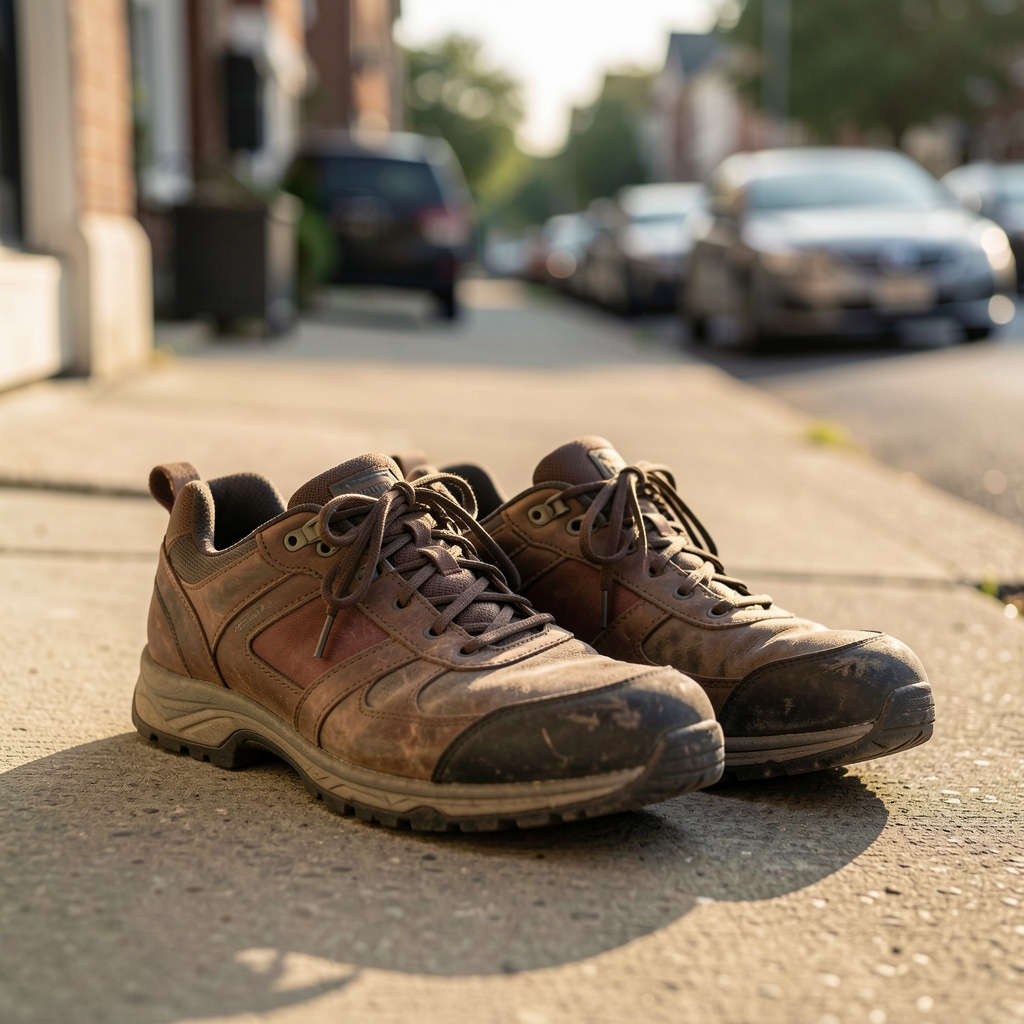
Where a small adjustment sits in the daily sequence matters considerably. The observation that emerges most clearly from these notebooks is that adjustments positioned at natural transition points — between working and eating, between waking and beginning a day, between ending a period of sedentary activity and beginning another — are far more likely to become recurring features of the day than adjustments positioned in the middle of continuous activities.
This corresponds with what researchers studying habit formation describe as contextual cueing: the role of preceding events in triggering subsequent behaviours. A walk that follows the closing of a laptop becomes associated with that closure over time; eventually, the laptop closing is itself the cue, and the decision-making that a new walk might otherwise require is largely bypassed. The adjustment has become, in the commonly used term, automatic — though a better description might be integrated.
Integration is the correct target. Not discipline in the sense of willpower-dependent enforcement, but a genuine folding of the adjustment into the daily sequence such that its absence, rather than its presence, would require effort. The notebooks suggest that this level of integration typically requires between six and ten weeks of consistent positioning — which corresponds closely to the timescales described in published habit-formation research.
"Physical readiness is not an achievement reached and maintained. It is a quality that emerges from attention paid daily, in small increments, to the body's presence in an ordinary life."
The compounding argument for small adjustments is familiar from financial contexts — the principle that small consistent contributions accumulate into significant totals over time — but its application to physical readiness is less commonly articulated. The evidence in this notebook record suggests a clear analogy.
At three months, the daily adjustments described above produce a noticeable but modest improvement in physical baseline: slightly reduced morning stiffness, somewhat improved tolerance for sustained standing, a clearer sense of where the physical edges of a working day are. At six months, the effect is more substantial: changes in posture, a reduced incidence of the end-of-week fatigue that previously characterised the record, and a quality of physical ease in ordinary movement that was absent in the earlier entries.
At twelve months — which now represents the available data — the effect is qualitatively different from what any single intensive intervention produced in the same period. The difference is not of intensity but of integration. The body has not been improved through a programme; it has been brought gradually into a different relationship with daily life. The distinction is significant for the purposes of sustaining the change over subsequent years.

A common response to the incremental approach is that it demands something harder than a structured programme: sustained, indefinite attention, without the clear terminal point that a twelve-week course provides. This is accurate, and it is worth acknowledging rather than glossing over. The incremental approach does not have an end date. It does not offer the satisfaction of completion.
What it does not require, however, is the allocation of large continuous blocks of time, dedicated equipment, or a particular location. The adjustments described here are portable and adaptable. They have continued through travel, through periods of unusual work intensity, through the various disruptions that ordinary life produces. A structured programme, by contrast, often depends on conditions — a gym, a regular timetable, a period of stability — that real life periodically removes.
The practical conclusion is not that structured exercise is without value — it plainly has value for many aspects of physical capacity that small daily adjustments do not address — but that the foundation of sustained physical readiness is better built through incremental daily amendment than through periodic intensive intervention. The two are not mutually exclusive. But for the purposes of building something durable, the daily adjustment is the more reliable instrument.
This entry draws on eighteen months of daily notebook entries, a practice described in more detail in the first entry of this volume. The records are not a scientific study — they are one person's documented experience, observed with reasonable care and reported without claims to generalisability beyond what the patterns suggest. The intention is not to direct but to offer a documented account that readers may find useful as a comparative reference for their own observations.
The second volume of Grasol Notebook, opening in autumn 2026, will include a longer examination of specific adjustments and the sequences into which they were introduced, drawing on the full eighteen-month record. The patterns discussed here will be revisited with the benefit of a longer observation window.